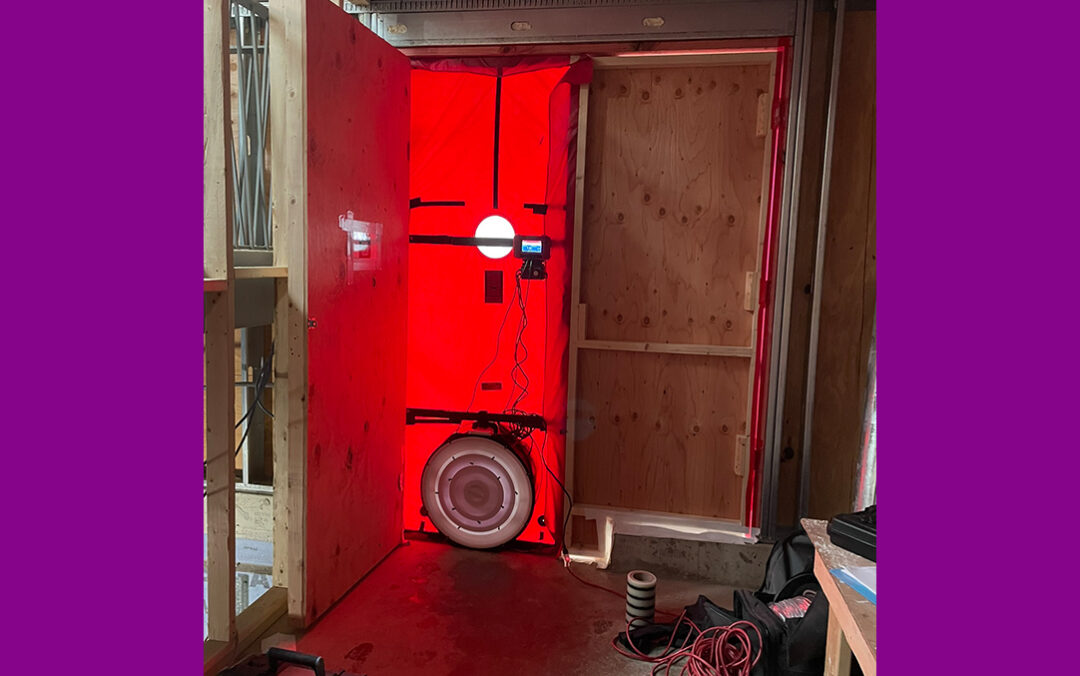
The blower door features a fan that is calibrated to the size of space being tested. This is how the building is pressurized and measured for air leakage.
Exciting update on 273 Highland, our affordable housing building in Roxbury!
What is the number one way buildings lose energy? Air leakage. To test how well the airtightness detailing is working, Haycon and RDH conducted a preliminary whole building blower door test and unit compartmentalization tests. Whole building blower door and unit compartmentalization tests are conducted by putting a fan into the door and pressurizing the building or unit to determine how much air is leaking.
Why is airtightness important?
A building with good air control:
- Uses less energy
- Is more comfortable (no drafts)
- Has healthier indoor air (reduces pollutants, allergens, and odors from other units)
- Enhances building durability by eliminating condensation from exfiltration (cold climates) and infiltration (hot climates), avoiding structural corrosion, mold growth and rot
What is Compartmentalization?
Compartmentalization is thinking of each residential unit as a sealed, 6-sided box. Reducing air movement between units is important for reducing energy loss and sound and odor transfer. Testing early, before installation of components like insulation, drywall, gypcrete, and siding that are relied on for enhanced air sealing, makes it easier to find and fix trouble spots.
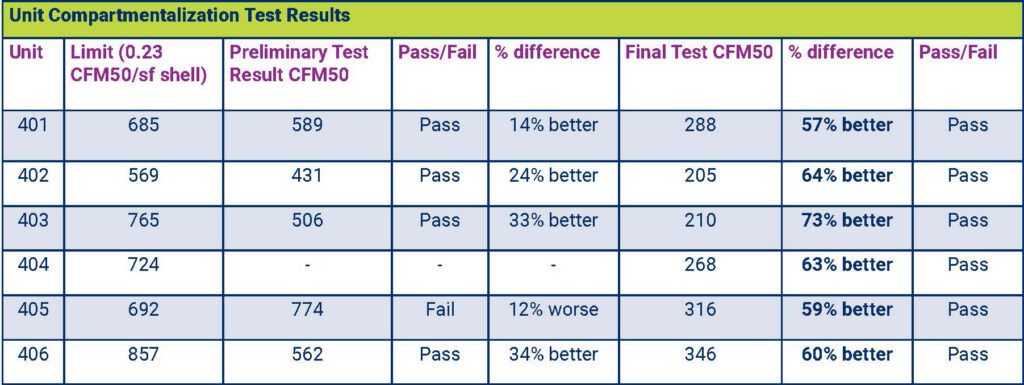
Three out of four units passed easily. Our test revealed inadequate sealing around plumbing at the tub drain in Unit 405. Catching this early allowed the construction and design team to address this and achieve better results.
A month later, final compartmentalization was tested on the 4th floor after those units had been insulated, drywalled, and a gypcrete floor had been poured. This second round of testing showed significant improvements in compartmentalization.
What is the target?
The requirement for Phius-certified passive house buildings is 0.06 cfm50/SF for the entire building. In the preliminary whole building test, 273 Highland achieved 0.04 cfm/SF, even though portions of the exterior air barrier hadn’t been sealed yet! This is 33% better than the target. The final whole building test will be conducted in the coming weeks. For unit compartmentalization, the LEED and Phius requirement is 0.23cfm50/SF.
See the results of the preliminary and final unit compartmentalization tests below:
Where are the typical trouble areas?
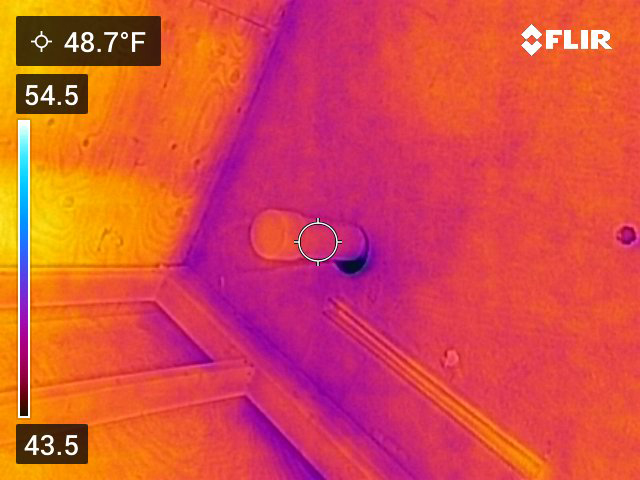
For unit compartmentalization, plumbing penetrations through the slab, especially at the tubs, are often a weak spot. Corners, and where assemblies and materials transition as well as outlets in demising, hallway, and exterior walls, are also often culprits.
What tools do we use?
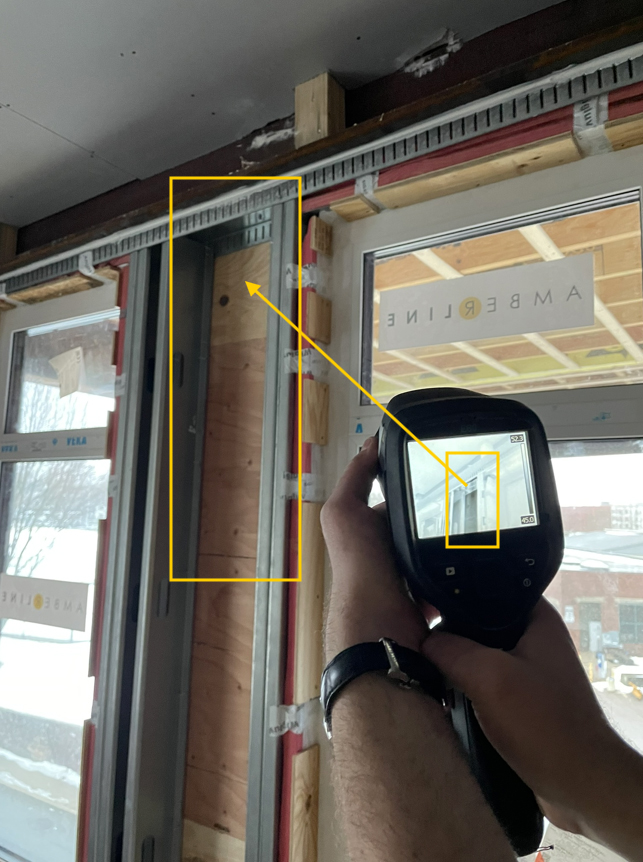
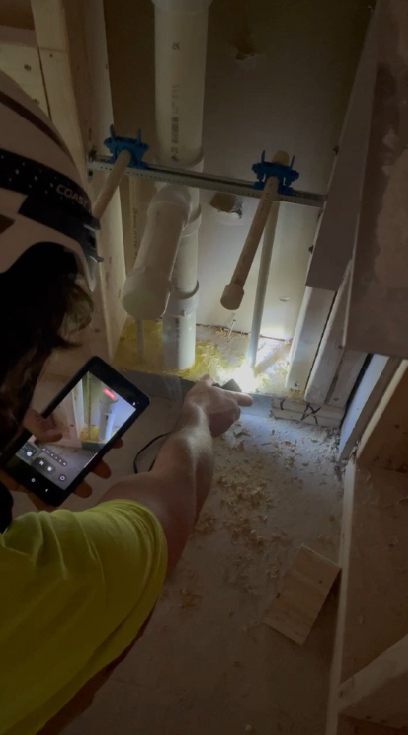
Using a small handheld smoke machine, the Phius verifier (RDH) goes around checking all the penetrations – plumbing vents, under the tub, outlet boxes, corners, ducts going to the hall, etc. – to see if air is leaking through – the smoke helps see where the air is moving.
Another tool we use is a thermal infrared camera to detect cold spots. The infrared images show purple as the darker, heat-loss locations. Sometimes this is because no exterior insulation is installed yet, and sometimes this is due to insulation that could be installed better.
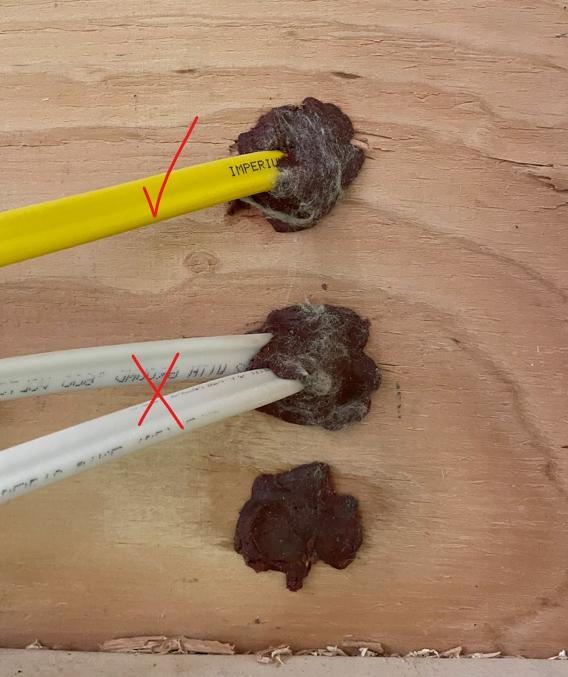
Using the right air barrier membrane that is taped at the exterior enclosure and windows, and caulking, putty packs at electrical boxes, and using the rule “1 hold, 1 line,” making the hole easier to seal are all good steps to ensuring proper air sealing.
Resources:
To dive further into the details, check out this great presentation “Air Sealing for CPHCs” by Maciej Konieczny at the 2024 Phius Pro Forum.